DISC 21 /ARTICLE 1:
Of Faith in the Holy Trinity
There is but one living and true God, everlasting, without body or parts; of infinite power, wisdom, and goodness; the maker and preserver of all things, both visible and invisible. And in the unity of this Godhead, there are three persons of one substance, power, and eternity—the Father, the Son, and the Holy Ghost.
* * *
We believe God is the Creator, Sustainer, and Sovereign Ruler of all that exists. He is distinct from, and in no way reliant upon, that which He creates. God feels, thinks, wills, desires, sees, communicates, sympathizes, and cares. God is absolutely perfect, and thus wholly complete unto Himself. He is holy, omniscient, omnipresent, and omnipotent. He is perfect in wisdom, righteousness, and justice, yet His equally perfect mercy and grace temper His justice. He is ultimately the source of happiness for all creation, as God is light, love, and life.
The Holy Scriptures do not use the word trinity anywhere in the text. Yet the biblical writers assert that this one God has chosen to reveal Himself to us as a triunity: the Father, the Son, and the Holy Spirit (or Holy Ghost in older translations). This unity in mystery is everywhere in the Holy Scriptures.
Often, we decide something is unreasonable because of our assumptions, rather than because of the logic of the thing itself. The logic of the Trinity works, once we accept the first premise that God has infinite qualitative distinction from His creation. Therefore, He cannot be known or understood outside of His self-revelation.
The fact that this is difficult for us to make sense of does not make it unreasonable. It simply highlights the limitations of human beings to comprehend phenomena outside of our limited experiences. As such, care must be taken when we are trying to explain the Trinity.
We must not exaggerate the distinctions between the Father, Son, and Holy Spirit so much that their separation results in thinking of them as three distinct gods. Nor can we reduce their distinctions so that we think of God as taking on three different forms over the course of Creation history. There is no one, and there is no thing, that is comparable to the LORD our God.
* * *
Reflect on the following Biblical texts. What are your thoughts on the way they reveal this doctrine to us? Discuss your answers with your pastor/group leader.
Genesis 1:1-2:25
Exodus 3:1-22 / Exodus 33:1-34:35
Leviticus 19:1-18
Deuteronomy 6:1-25 (cf. Matthew 22:34-40)
Isaiah 40:1-31 / Isaiah 45:1-10
Nehemiah 9:1-38
Matthew 3:13-17 / Matthew 28:18-20
Acts 17:22-34
Ephesians 1:1-23 / Ephesians 3:14-4:6
Hebrew 1:1-14
1 John 5:1-12
Revelation 4:1-11 / Revelations 19:1-21:27
* * *
Use the following questions to summarize what you have learned about this Article of Faith. Discuss your answers with your pastor/group leader. (*Adapted from Wesley’s Catechism questions 4-6.)
In your own words, what is it that makes the LORD, God?
If God is not Human, then why do we use masculine titles and pronouns when we speak about Him?
If there is only one God, why do we say He is three persons?
Why is it necessary for God to be all-knowing, all-powerful, and all-present?
How does the fact that God is wholly complete unto Himself allow Him to be the source of truth, love, and life?
How does this doctrine affect the practice of our faith?
Notes:
LEVEL ONE ACCESS POINTS FOR FURTHER ENGAGEMENT



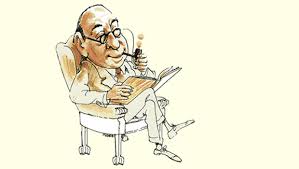
LEVEL 1: C.S. Lewis Doodle / CS Lewis on the Three-Personal God / BBC Talk 19, Mere Christianity, Bk 4, Chapter 2
Learn MoreLEVEL TWO ACCESS POINTS FOR FURTHER ENGAGEMENT
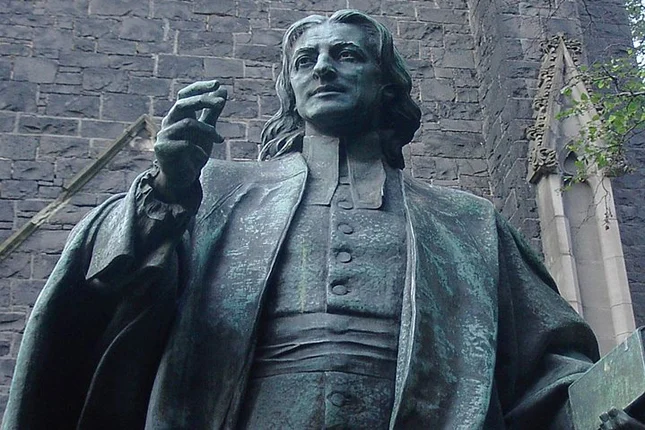
LEVEL THREE ACCESS POINTS FOR FURTHER ENGAGEMENT
LEVEL 3: Harold Browne. An Exposition of the Thirty-Nine Articles, Historical and Doctrinal. Legare Street Press (2022) / Of the Holy Trinity Pt1
Learn More