DISC 25 /ARTICLE 5:
Of the Sufficiency of the Holy Scriptures for Salvation
The Holy Scriptures contain all things necessary to salvation; so that whatsoever is not read therein, nor may be proved thereby, is not to be required of any man, that it should be believed as an article of faith, or be thought requisite or necessary to salvation. In the name of the Holy Scriptures, we do understand those canonical books of the Old and New Testaments, of whose authority was never any doubt in the church.
The names of the Canonical Books: Genesis, Exodus, Leviticus, Numbers, Deuteronomy, Joshua, Judges, Ruth, The First Book of Samuel, The Second Book of Samuel, The First Book of Kings, The Second Book of Kings, The First Book of Chronicles, The Second Book of Chronicles, The Book of Ezra, The Book of Nehemiah, The Book of Esther, The Book of Job, The Psalms, The Proverbs, Ecclesiastes, or the Preacher, Cantica, or Song of Solomon, Four prophets the Greater, Twelve prophets the less. All the books of the New Testament, as they are commonly received, we do receive and account canonical.
* * *
As the revealed words of God through His People, as the Holy Spirit inspired them to write, the Bible has absolute authority in all matters of faith and practice. We believe that it is entirely trustworthy and accurate, without contradiction or error in the original texts, and kept by the providential hand of the Holy Spirit, who guides the work of God’s people from generation to generation. For the written words of God are the living Word through which the Holy Spirit continues to illuminate, instruct, convict, regenerate, and sanctify, as we commit ourselves to the responsible study of it.
We affirm that the Old and New Testaments tell one story of God and His Creation across multiple historical, cultural, and linguistic contexts. Together, this diversity weaves into a single metanarrative that claims to be the exclusive explanation of all that is real, true, good, and beautiful. This consistency was one of the primary tests for authenticity, and it is still an essential protection against false teaching.
We affirm that the canon of Holy Scripture was not arbitrarily chosen by the Roman Catholic Church under Constantine, or even the Ante-Nicene Church Fathers. Instead, the early Christians recognized and codified those writings that had already received the endorsement of history. These were the writings that the majority of the Christian Community had come to think of as authentically breathed out by the Holy Spirit, as God’s Holy Word, as accurate and authoritative.
We acknowledge that there were other writings, collectively known as the Apocrypha, which were not accepted into the canon for various reasons. Some were considered authentic in their authorship and valuable in their own right, but they were not regarded as having been inspired by the Holy Spirit; therefore, they did not rise to the level of Holy Scripture. Others were considered to have dubious authorship and were shunned as attempts at outright deception. While the use of apocryphal texts for personal study is not forbidden, it should be undertaken cautiously.
* * *
Reflect on the following Biblical texts. What are your thoughts on the way they reveal this doctrine to us? Discuss your answers with your pastor/group leader.
Deuteronomy 4:1-14 / Deuteronomy 29:29-30:20
Psalm 1:1-6 / (Cf. Ps 119:1-176 / Proverbs 8:1-36 / Proverbs 9:10 / Nehemiah 8:1-8)
Matthew 5:17-20 (cf. Luke 16:19-31)
Romans 1:1-2:29
1 Timothy 4:1-16 / 1 Timothy 6:1-21
2 Timothy 2:1-3:17
James 1:1-27
2 Peter 1:1-21
Revelation 22:6-21
* * *
Use the following questions to summarize what you have learned about this Article of Faith. Discuss your answers with your pastor/group leader. (*Adapted from Wesley’s Catechism questions 1-3 & 83-84.)
Why do we say that God has revealed Himself in the Holy Scriptures?
Why are the concepts of Revelation and Inerrancy necessarily bound together?
What should we do when we come across apparent contradictions in the Bible?
How does the Holy Scripture help us to know God, love Him, and live fully alive through Him?
How does this doctrine affect the practice of our faith?
Notes:
LEVEL ONE ACCESS POINTS FOR FURTHER ENGAGEMENT

LEVEL 1: ARTICLE 6
LEVEL 1: ARTICLE 7
LEVEL 1: ARTICLE 14

LEVEL TWO ACCESS POINTS FOR FURTHER ENGAGEMENT
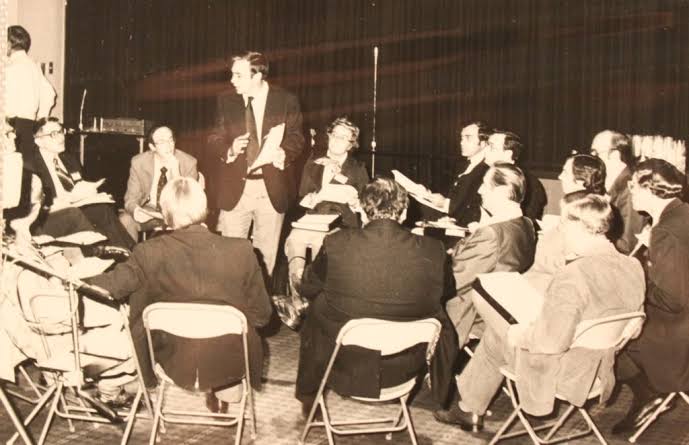
LEVEL 2: The International Council on Biblical Inerrancy / The Chicago Statement On Biblical Inerrancy
Learn More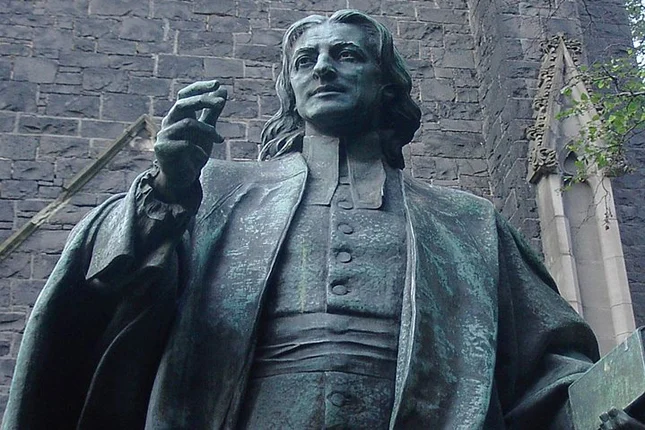
LEVEL 2: John Wesley / Sermon on The Case Of Reason Impartially Considered, 1 Corinthians 14:20
Learn More

LEVEL 2: Michael J. Kruger / Ten Basic Facts About the NT Canon that Every Christian Should Memorize
Learn MoreLEVEL THREE ACCESS POINTS FOR FURTHER ENGAGEMENT
LEVEL 3: Harold Browne. An Exposition of the Thirty-Nine Articles, Historical and Doctrinal. Legare Street Press (2022) / Of the Sufficiency of the Holy Scriptures for Salvation Pt1
Learn MoreLEVEL 3: Harold Browne. An Exposition of the Thirty-Nine Articles, Historical and Doctrinal. Legare Street Press (2022) / Of the Sufficiency of the Holy Scriptures for Salvation Pt2
Learn More