DISC 26 /ARTICLE 6:
Of the Old Testament
The Old Testament is not contrary to the New; for both in the Old and New Testaments everlasting life is offered to mankind by Christ, who is the only Mediator between God and man, being God and man. Wherefore they are not to be heard who feign that the old fathers did look only for transitory promises. Although the law given from God by Moses, as touching ceremonies and rites, doth not bind Christians, nor ought the civil precepts thereof necessity to be received in any Commonwealth; yet, notwithstanding, no Christian whatsoever is free from the obedience of the commandments which are called moral.
* * *
Jesus Christ has inaugurated the New Covenant, which is the central focus of the New Testament. Therefore, we are no longer obligated to observe the Mosaic Covenant of Sinai. However, as we have already seen, the Old and New Testaments tell a unified story of God and His creation across multiple historical, cultural, and linguistic contexts. Together, this diversity weaves into a single metanarrative that claims to be the exclusive explanation of all that is real, true, good, and beautiful.
Within this hermeneutical framework, we understand that the Old Testament foreshadows the New and the New Testament fulfills the Old. So, just as the Civil laws of the biblical Nation-state of Israel, as commanded by Moses, do not apply to us because we are not members of that Nation-state, the Sacrificial rituals and other Ceremonial laws are no longer binding expressions of the Faith because Christ has satisfied the requirements of the Mosaic Law. However, because the two testaments form one metanarrative, the fact that we are no longer bound to certain civil, ceremonial, or sacrificial codes does not mean that those sections of the Holy Scripture cease to have value.
Jesus asserted that all the Holy Scripture was fixed on loving God and loving our neighbor. Therefore, it is incumbent upon us not to slander, ignore, or remove any part of the Holy Scripture, but rather to seek to understand and to teach the whole counsel of God. As such, understanding and integrating the principles that undergird the civil, ceremonial, and moral commands into our thinking is still key to living the life God intended for us.
* * *
Reflect on the following Biblical texts. What are your thoughts on the way they reveal this doctrine to us? Discuss your answers with your pastor/group leader.
Exodus 19:1-20:21
Deuteronomy 11:1-32 (cf. Psalm 78:1-8 / Micah 6:1-8)
Matthew 5:1-7:29
Luke 24:13-49
Romans 10:1-21
Galatians 3:1-29 (cf. Hebrews 1:1-2a)
* * *
Use the following questions to summarize what you have learned about this Article of Faith. Discuss your answers with your pastor/group leader. (*Adapted from Wesley’s Catechism questions 34-78.)
How does Jesus summarize the Law & Commandments of God in Matthew 22:33-40?
Since Jesus is the fulfillment of the Law, in what ways is His character revealed in the teachings of the Old Testament?
How does this doctrine affect the practice of our faith?
Notes:
LEVEL ONE ACCESS POINTS FOR FURTHER ENGAGEMENT

LEVEL 1: ARTICLE 1
LEVEL 1: ARTICLE 5
LEVEL 1: ARTICLE 7
LEVEL 1: ARTICLE 14

LEVEL TWO ACCESS POINTS FOR FURTHER ENGAGEMENT
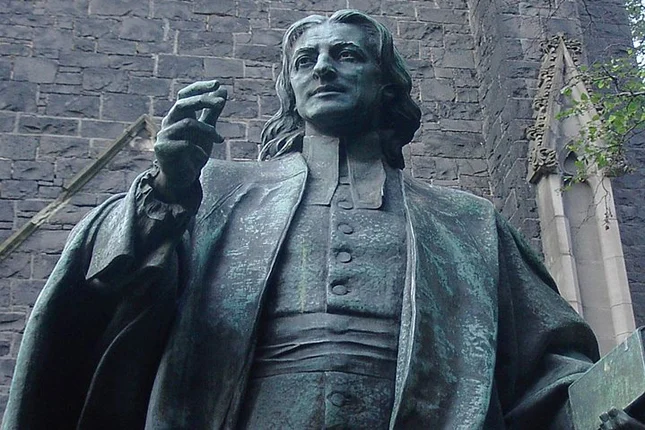
LEVEL 2: John Wesley / Sermon on The Law Established Through Faith: Discourse One, Romans 3:31
Learn MoreLEVEL 2: John Wesley / Sermon on The Law Established Through Faith: Discourse Two, Romans 3:31
Learn MoreLEVEL 2: John Wesley / Sermon on The Original Nature And Proper Use Of The Law, Romans 7:12
Learn MoreLEVEL THREE ACCESS POINTS FOR FURTHER ENGAGEMENT

LEVEL 3: Harold Browne. An Exposition of the Thirty-Nine Articles, Historical and Doctrinal. Legare Street Press (2022) / Of the Old Testament
Learn More